Ahuti MK-II Drone has officially established a revolutionary benchmark in high-speed aerial interception after reaching a certified top speed of 498 km/h on 1 September 2026, earning recognition in the India Book of Records as the fastest multi-rotor unmanned aerial vehicle (UAV) in India. Developed by Apollyon Dynamics, a defence technology start-up co-founded by Jayant Khatri and Sourya Choudhary, the platform represents a significant breakthrough in indigenous counter-drone defense capabilities. Incubated at the BITS Pilani Hyderabad Campus and incorporated in 2025, Apollyon Dynamics engineered this high-speed kinetic interceptor specifically to chase down and neutralize fast-moving airborne threats. For additional background on this breaking development, read our detailed report: Ahuti MK-II Drone: India’s Record-Breaking 498 km/h Interceptor.
Engineering Speed: The Genesis of the Ahuti MK-II Drone
The development of high-speed interception platforms has become critical as autonomous and robotic weapons transform modern warfare, expanding roles from surveillance to precision strikes. Unlike conventional multi-rotor drones optimized for aerial photography, mapping, or payload transport, the platform was conceived purely as an interceptor built to close engagement gaps against incoming hostile assets in minimal time.
Technical Evolution: From Prototype to 498 km/h Record
The journey toward achieving 498 km/h required a complete structural and mechanical overhaul of the original concept. The primary technical milestones in this evolution include:
- The Baseline Prototype (2025): Built in 2025, the original Ahuti prototype achieved an impressive top speed of approximately 300 km/h.
- Ground-Up Redesign: Rather than merely pushing the original airframe beyond its structural limits, the engineering team opted to rebuild the platform entirely for the interceptor role.
- 66% Speed Upgrade: Through exhaustive technical refinements, the team achieved a speed increase of nearly 200 km/h within less than a single year, representing a 66% performance jump.
- Iterative Design Process: The engineering process involved roughly ten comprehensive iterations of the drone’s frame, propulsion systems, and motor configurations.
- High-Current Power Delivery: To achieve maximum velocity, the propulsion layout was engineered to draw burst currents of up to 400 amperes during peak acceleration.
The technical team behind this record-breaking achievement was led by high-speed drone pilot Aman Virani (known as “Shady”), alongside engineers Manas Vichare and Ishaan Suri. By blending specialized piloting experience with aeromechanical engineering, the team pushed the multi-rotor configuration past historic thermal and aerodynamic limits.
The Ahuti MK-II Drone Intercept Paradigm vs. Low-Cost Aerial Threats
The operational philosophy of the platform is directly linked to the changing mechanics of modern air defense. Traditional surface-to-air missile systems, while effective, rely on highly expensive munitions to destroy low-cost asymmetrical threats. The emergence of inexpensive unmanned systems—including Shahed-class loitering munitions—poses a severe economic and tactical challenge to modern armed forces.
Co-founder Sourya Choudhary emphasized that speed is not merely a technical performance metric, but the core prerequisite for successful operational interception. Reaching 498 km/h ensures that the kinetic interceptor can overtake fast-moving threat vectors before they reach vital assets. Furthermore, Apollyon Dynamics evaluates system performance through internal metrics such as “cost per distance delivered” and “strike envelope per rupee.” By optimizing the strike envelope relative to economic cost, the platform serves as an affordable counter-measure against low-cost enemy aerial threats.
Comparative Analysis of Indian Indigenous Unmanned Combat Platforms
India’s broader defense industry has simultaneously made strategic strides across loitering munitions and specialized unmanned platforms. To contextualize where high-speed multi-rotor interceptors sit within the nation’s military inventory, it is useful to evaluate recent indigenous inductions and developments.
Major defense players and innovative start-ups are addressing distinct layers of modern battle space operations:
- TATA Advanced Systems Limited (TASL) ALS-50: A loitering munition platform designed specifically for long-range tactical precision strikes in challenging high-altitude geographic zones such as Ladakh.
- Solar Industries Nagastra-1: A precision loitering munition procured by the Indian Army under emergency procurement rules to deliver frontline, tactical-level strike capabilities to battlefield commanders.
- Apollyon Dynamics Interceptor: A high-velocity, electric multi-rotor system designed to act as a reactive shield, chasing down and disabling incoming hostile drones and suicide loitering platforms.
Platform Capabilities Matrix
Key Highlights: Platform Name Developer / Manufacturer Primary Platform Type Key Operational Role & Specs Ahuti MK-II Drone Apollyon Dynamics (BITS Pilani) Electric Multi-Rotor Interceptor Certified 498 km/h top speed; designed for high-speed counter-drone interception and disabling hostile loitering munitions. ALS-50 TATA Advanced Systems Limited Loitering Munition Designed for sustained flight and precision strikes in extreme high-altitude regions such as Ladakh. Nagastra-1 Solar Industries Tactical Loitering Munition Procured under emergency procurement rules for frontline Indian Army tactical strike missions.
Multi-Rotor Interceptors vs. Fixed-Wing Loitering Systems
While platforms like the ALS-50 and Nagastra-1 operate as offensive loitering munitions—remaining airborne over a target zone to locate and detonate on impact—multi-rotor platforms like the Ahuti MK-II Drone fulfill a complementary counter-offensive function. Based on currently available public data, Apollyon Dynamics assesses that no other multi-rotor aircraft in South Asia has matched or exceeded the 498 km/h velocity reached by their platform, providing a unique regional capability in point defense.
Operational Integration, Army Trials, and the 2030–2032 Roadmap
The progression from design concept to active military hardware requires rigorous testing under field conditions. Apollyon Dynamics has validated its unmanned technologies at major military proving grounds, including the Babina and Gopalpur ranges, with formal backing and operational guidance from the Indian Army. Beyond range testing, the start-up has supplied tactical unmanned systems to active Indian Army units, demonstrating practical operational integration on the ground.
Operating under the core motto “Precision is Mercy,” the company aims to deploy unmanned systems in high-risk, first-contact scenarios. By sending rapid autonomous or semi-autonomous platforms into hostile engagements first, defense forces can minimize direct human exposure and reduce military casualties.
Looking beyond the multi-rotor interceptor framework, Apollyon Dynamics has charted an ambitious long-term strategic technology roadmap:
- 2030 Horizon: Development of an advanced Power Cruise Missile platform.
- 2032 Horizon: Scaling architecture to develop a large-scale cruise missile platform capable of carrying thousands of kilograms of high-explosive payloads over operational distances.
- Strategic Mentorship: Guidance for these deep-tech strike programs is supported by industry veterans, including Professor M Rama Manohara Babu, a former program director for the Agni missile series.
Classification of Autonomy in Modern Air Defense Architecture
As interceptors and unmanned strike platforms enter operational service, the role of human operational control versus machine autonomy remains a key operational and regulatory discussion point. Unmanned and autonomous systems are generally classified across three distinct operational frameworks based on the level of human involvement:
- Human-in-the-Loop: Systems that can autonomously search for, detect, and track a potential target using onboard sensors, but strictly require explicit manual approval from a human operator before initiating a kinetic strike.
- Human-on-the-Loop: Systems that execute monitoring, tracking, and engagement routines semi-autonomously, while allowing a human operator to constantly monitor operations and intervene or abort the mission if necessary.
- Human-out-of-the-Loop: Fully autonomous systems capable of searching, identifying, selecting, and engaging targets without any direct human manual intervention.
Lethal Autonomous Weapons Systems (LAWS) leverage multi-spectral sensors, artificial intelligence, and sophisticated computer vision algorithms to evaluate battlefields in real time. Internationally, nations are fielding diverse autonomous defense technologies:
- South Korea: Deployed the SGR-A1 stationary autonomous sentry gun developed in collaboration with Samsung.
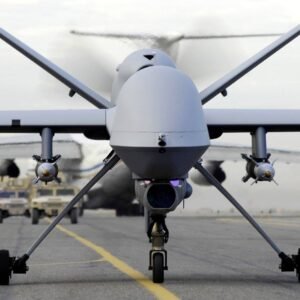
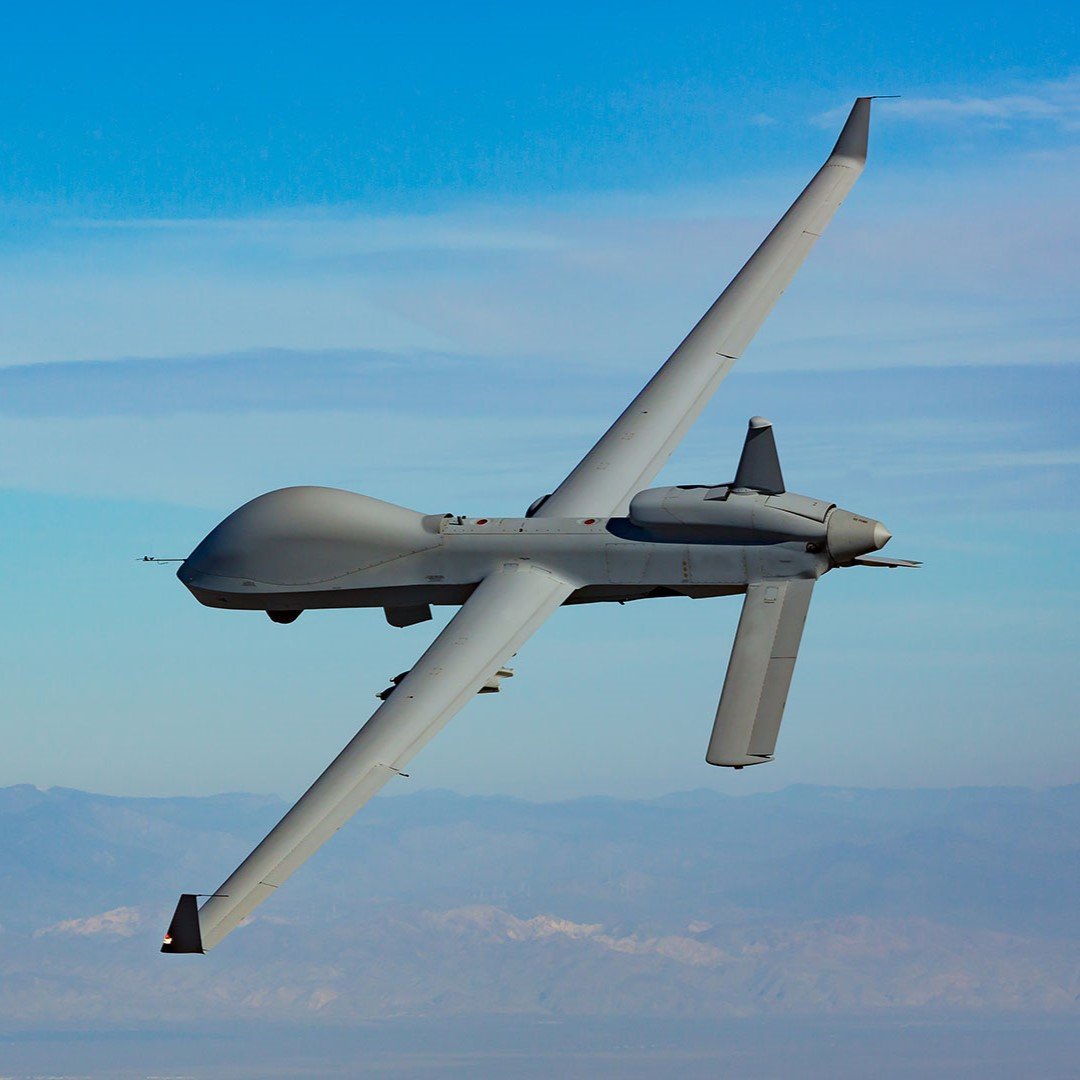
- United States: Deploys the MQ-9 Reaper for semi-autonomous long-range surveillance and precision strike missions, alongside the US Navy’s Sea Hunter, an unmanned surface vessel demonstrating sea-based operational autonomy.
- Russia: Developed the Uran-9, an autonomous tracked unmanned combat ground vehicle designed for infantry fire support and battlefield reconnaissance.
The deployment of these platforms takes place amid continuous international dialogue. Global consensus and regulatory standards regarding LAWS remain under formal debate at the United Nations, specifically within the framework of the Convention on Certain Conventional Weapons (CCW) under the Group of Governmental Experts (GGE).
Frequently Asked Questions (FAQs)
What is the certified top speed of the Ahuti MK-II Drone, and who verified it?
The Ahuti MK-II Drone achieved a certified top speed of 498 km/h on 1 September 2026. This performance was officially recognized and certified by the India Book of Records, making it the fastest multi-rotor UAV in India.
Who developed the Ahuti MK-II Drone and where was it incubated?
The platform was developed by Apollyon Dynamics, a defense technology start-up co-founded by Jayant Khatri and Sourya Choudhary. The company was incorporated in 2025 and is incubated at the BITS Pilani Hyderabad Campus. The engineering and flight team included drone pilot Aman Virani (“Shady”), Manas Vichare, and Ishaan Suri.
How does the Ahuti MK-II Drone compare to fixed-wing loitering munitions like Nagastra-1 and ALS-50?
While loitering munitions such as Nagastra-1 (Solar Industries) and ALS-50 (TATA Advanced Systems) are designed to loiter over enemy ground positions to conduct strikes, the electric multi-rotor interceptor is purpose-built for counter-drone defense. Its primary function is to rapidly chase, intercept, and disable incoming hostile drones and suicide loitering munitions economically.
Has the platform undergone testing with the military?
Yes. Apollyon Dynamics has conducted trials for its unmanned systems at major Indian military ranges, including Babina and Gopalpur, with backing from the Indian Army. The start-up has also delivered tactical unmanned systems to active Indian Army units.
Final Strategic Outlook
The emergence of high-speed interceptors marks a crucial progression in modern military aviation and counter-UAV strategy. By achieving a certified top speed of 498 km/h through high-current electrical propulsion engineering, the Ahuti MK-II Drone offers an economically viable solution for defending critical airspace against low-cost, high-speed aerial threats. As Apollyon Dynamics advances its technology toward future cruise missile platforms, India’s defense start-up ecosystem continues to strengthen its role in both battlefield innovation and the global debate surrounding autonomous systems.